


Best Markets in Japan: Where to Find Authentic Local Goods and Street Finds
Markets in Japan offer a completely different shopping experience compared to modern shopping districts and department stores. They are more local, more sensory, and often more connected to regional culture. From fresh seafood auctions and traditional street stalls to flea markets and artisan craft fairs, Japanese markets are where everyday life and tourism naturally overlap.
Unlike curated retail spaces, markets are less polished and more spontaneous, making them ideal for travelers looking for authentic goods, street food, and unique souvenirs.
Tsukiji Outer Market (Tokyo): Food, Knives & Street Snacks
Although the main wholesale fish auction moved to Toyosu, the Tsukiji Outer Market remains one of Tokyo's most visited food markets. It is packed with small stalls, seafood vendors, and traditional food shops.
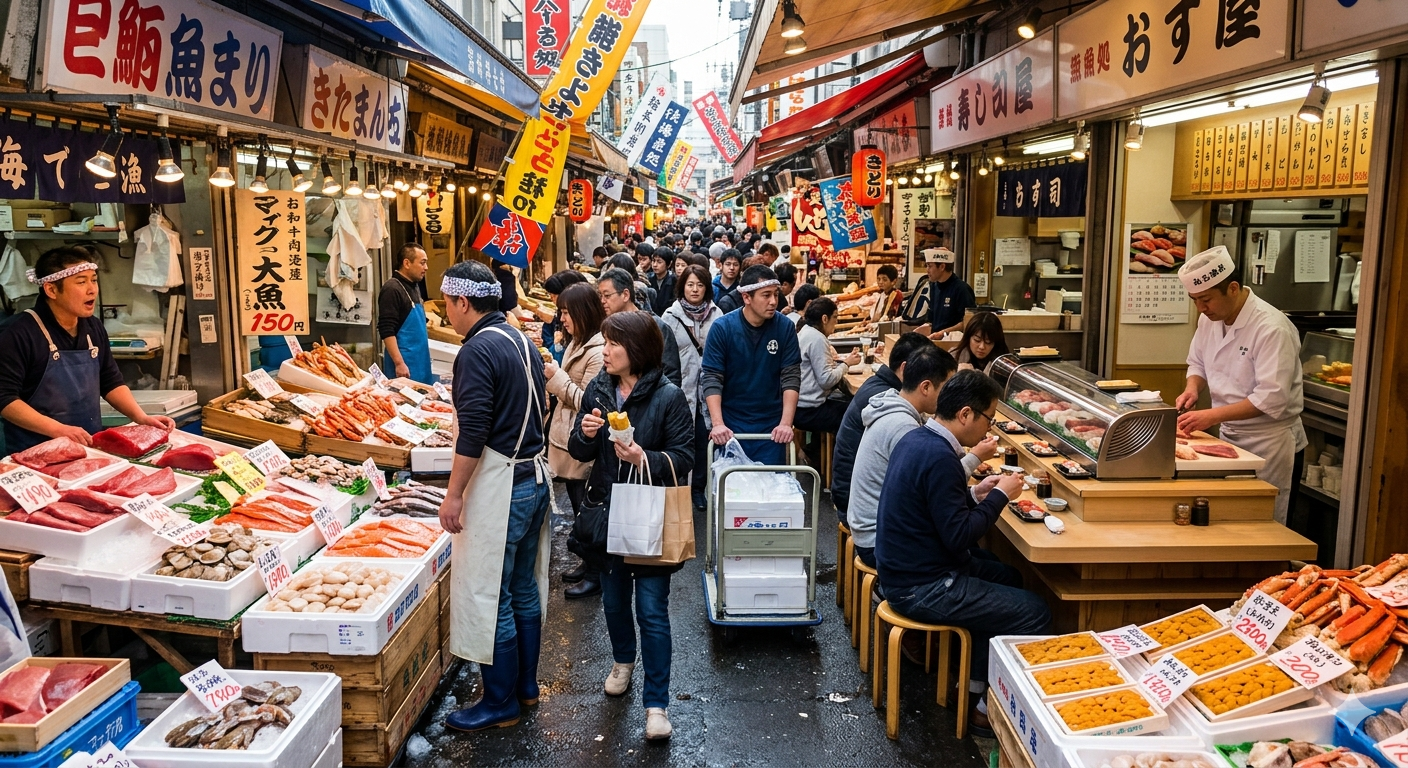
What to find here:
- Fresh sushi and sashimi bowls
- Japanese street food (grilled seafood, tamagoyaki, skewers)
- High-quality Japanese kitchen knives
- Matcha sweets and traditional snacks
This market is ideal for food lovers who want to experience Tokyo's culinary roots in a compact, walkable space.
Nishiki Market (Kyoto): "Kyoto's Kitchen"
Nishiki Market is a narrow covered shopping street in central Kyoto known for traditional food culture and regional specialties. It has been operating for centuries and is often called the culinary heart of Kyoto.
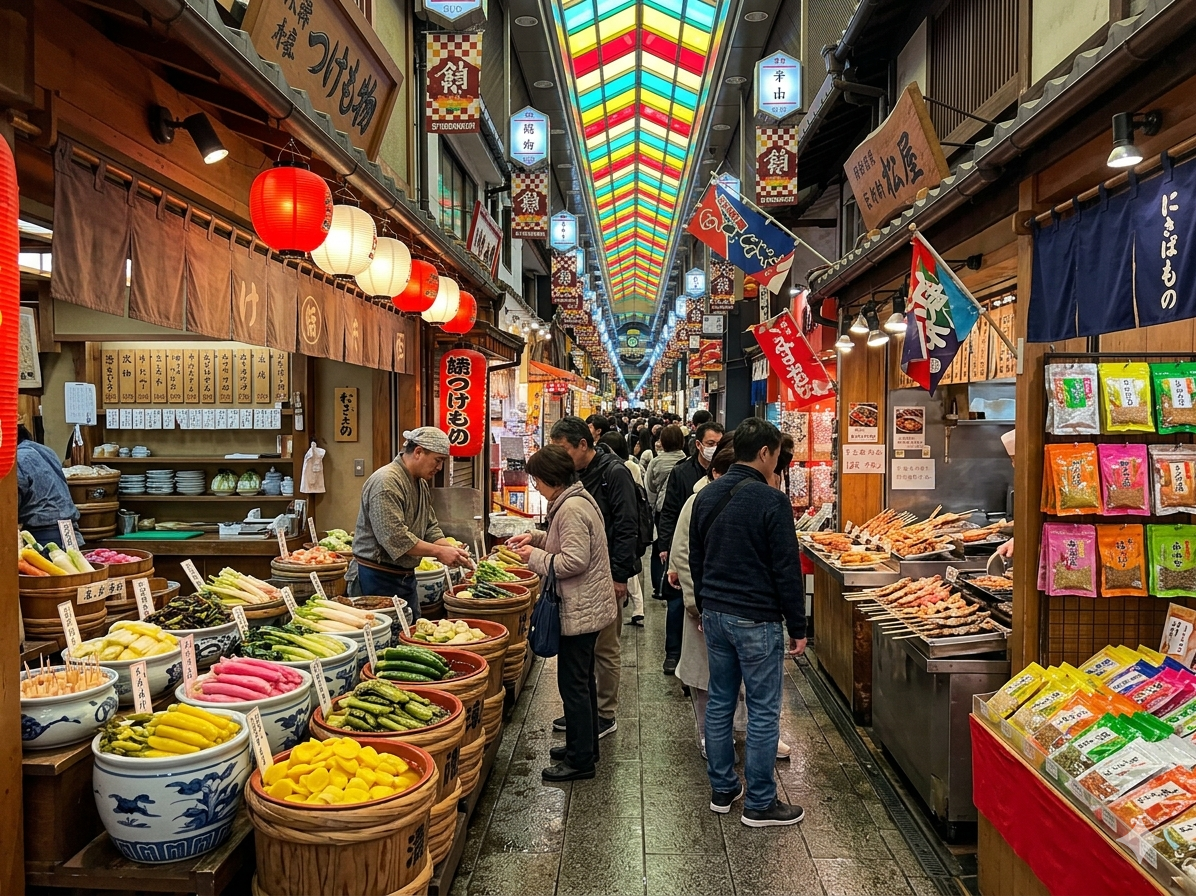
What to find here:
- Kyoto pickles (tsukemono)
- Matcha-based snacks and sweets
- Fresh tofu and yuba (soy milk skin)
- Traditional Japanese street snacks
- Small souvenir food items
Nishiki Market is less about mass tourism and more about experiencing Kyoto's daily food culture.
Kuromon Ichiba Market (Osaka): The Food Paradise
Kuromon Market is one of Japan's most famous fresh food markets, known for its lively atmosphere and ready-to-eat seafood.
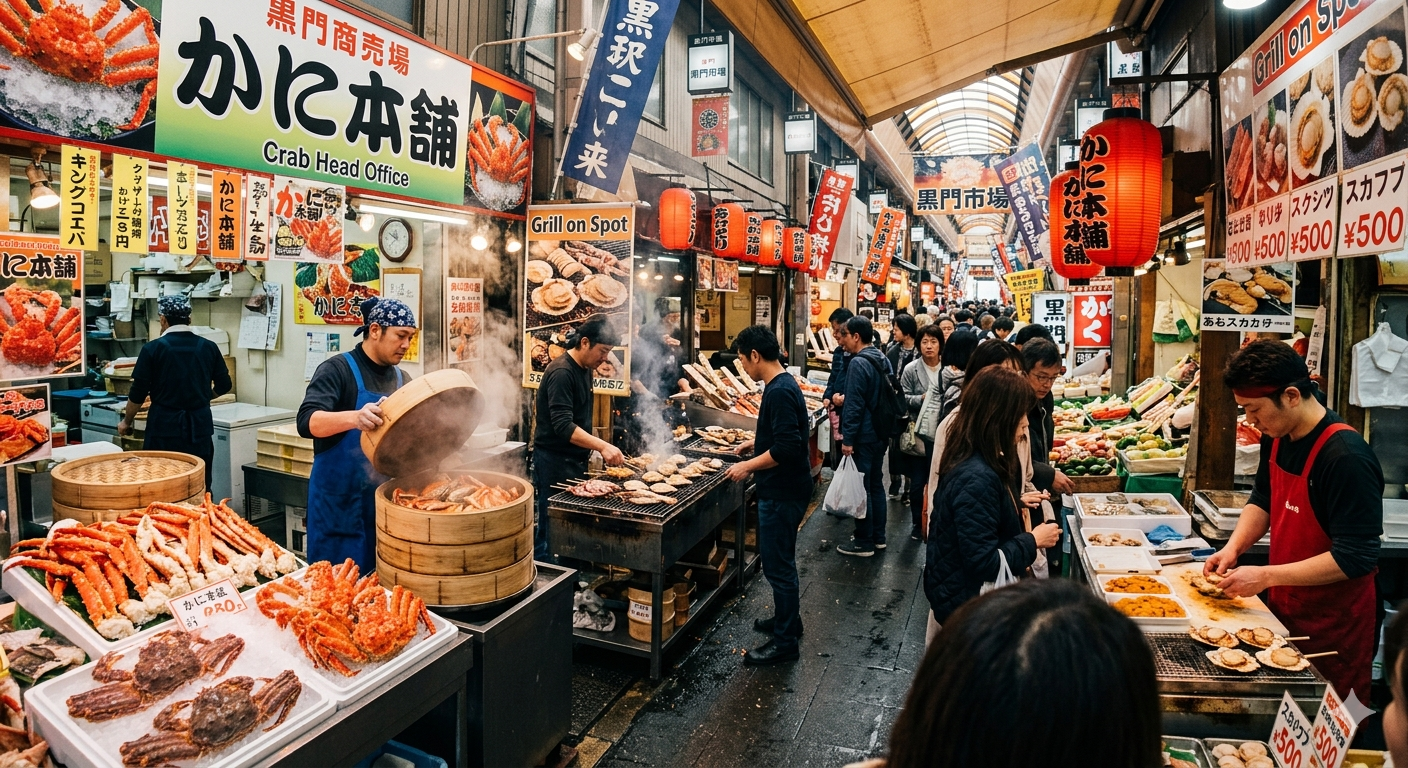
What to find here:
- Grilled crab, scallops, and seafood skewers
- Wagyu beef tasting portions
- Fresh fruit and desserts
- Street-style sushi and sashimi
- Osaka specialty snacks
It is often called "Osaka's kitchen" and is perfect for sampling multiple foods in one visit.
Ameya-Yokocho (Tokyo): Street Market Energy in Ueno
Ameya-Yokocho, often called "Ameyoko," is a bustling open-air market located between Ueno and Okachimachi. It has a more chaotic, street-style atmosphere compared to structured markets.
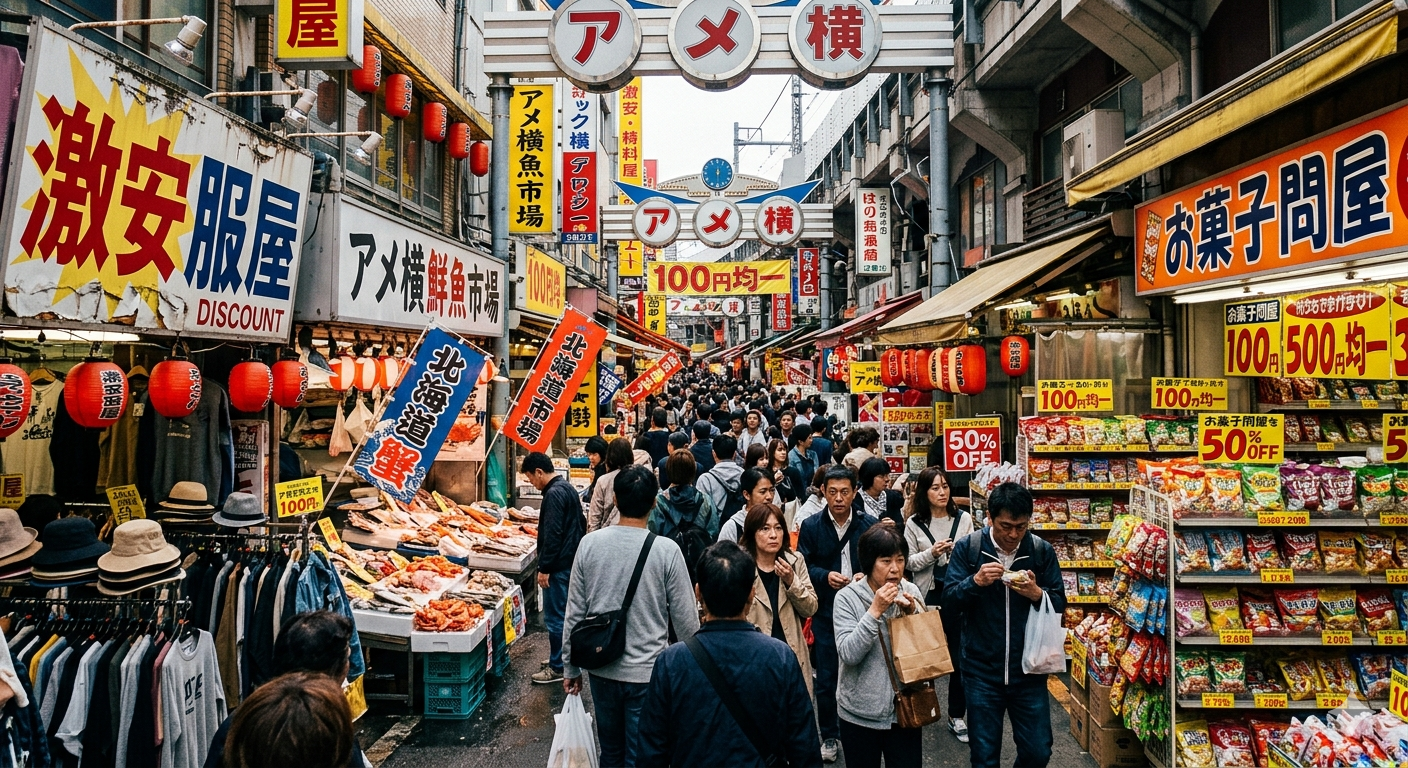
What to find here:
- Discount clothing and accessories
- Dried seafood and spices
- Cosmetics and daily goods
- Street food stalls and casual snacks
Ameyoko is known for bargains and variety rather than luxury or tradition.
Otaru Sankaku Market (Hokkaido): Fresh Seafood Experience
Located in northern Japan, Otaru Market is famous for its ultra-fresh seafood sourced directly from Hokkaido waters.
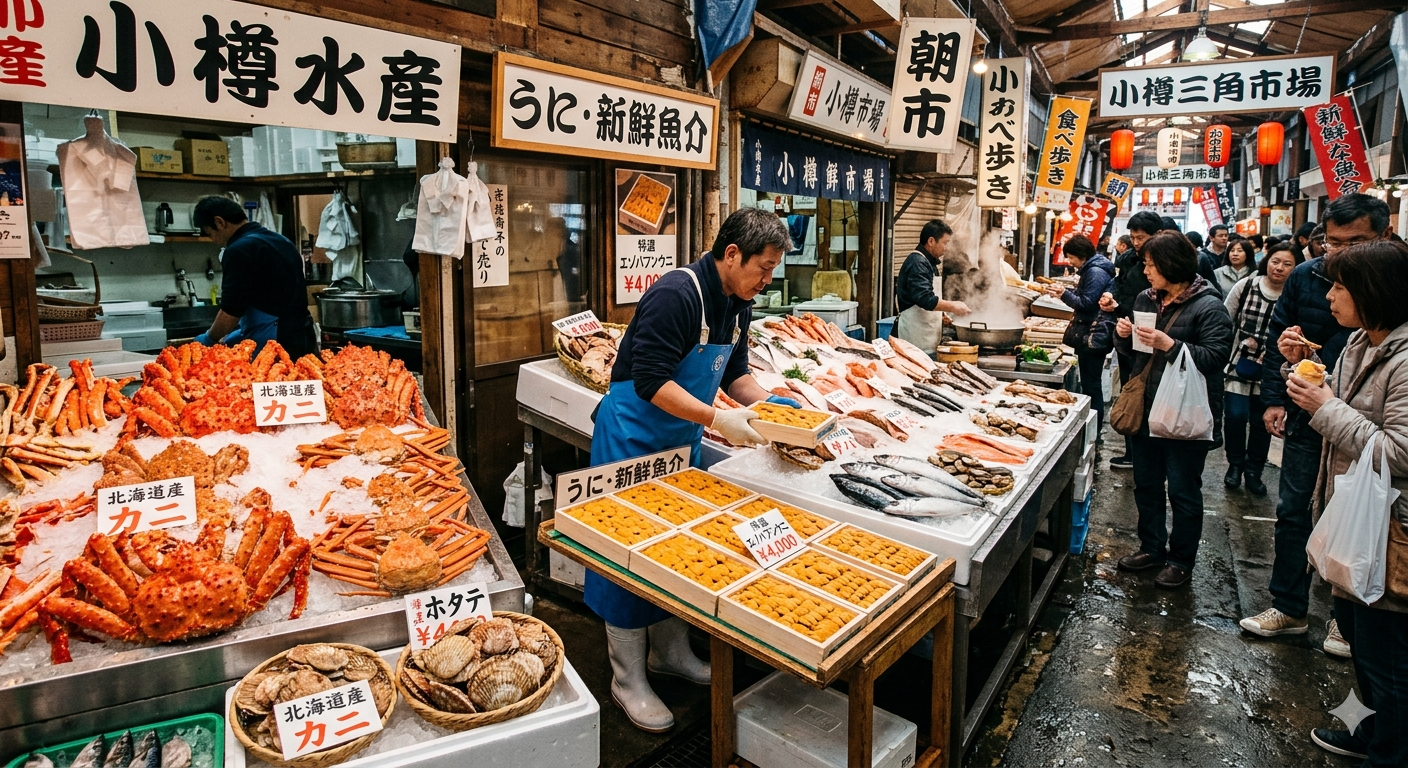
What to find here:
- Fresh uni (sea urchin) bowls
- Hokkaido crab and shellfish
- Seafood rice bowls (kaisendon)
- Local dairy and sweets products
This market is ideal for travelers exploring Japan's northern culinary culture.
Toji Temple Flea Market (Kyoto): Vintage and Antiques
Held monthly, the Toji Temple flea market is one of Kyoto's best places for antiques and second-hand cultural items.
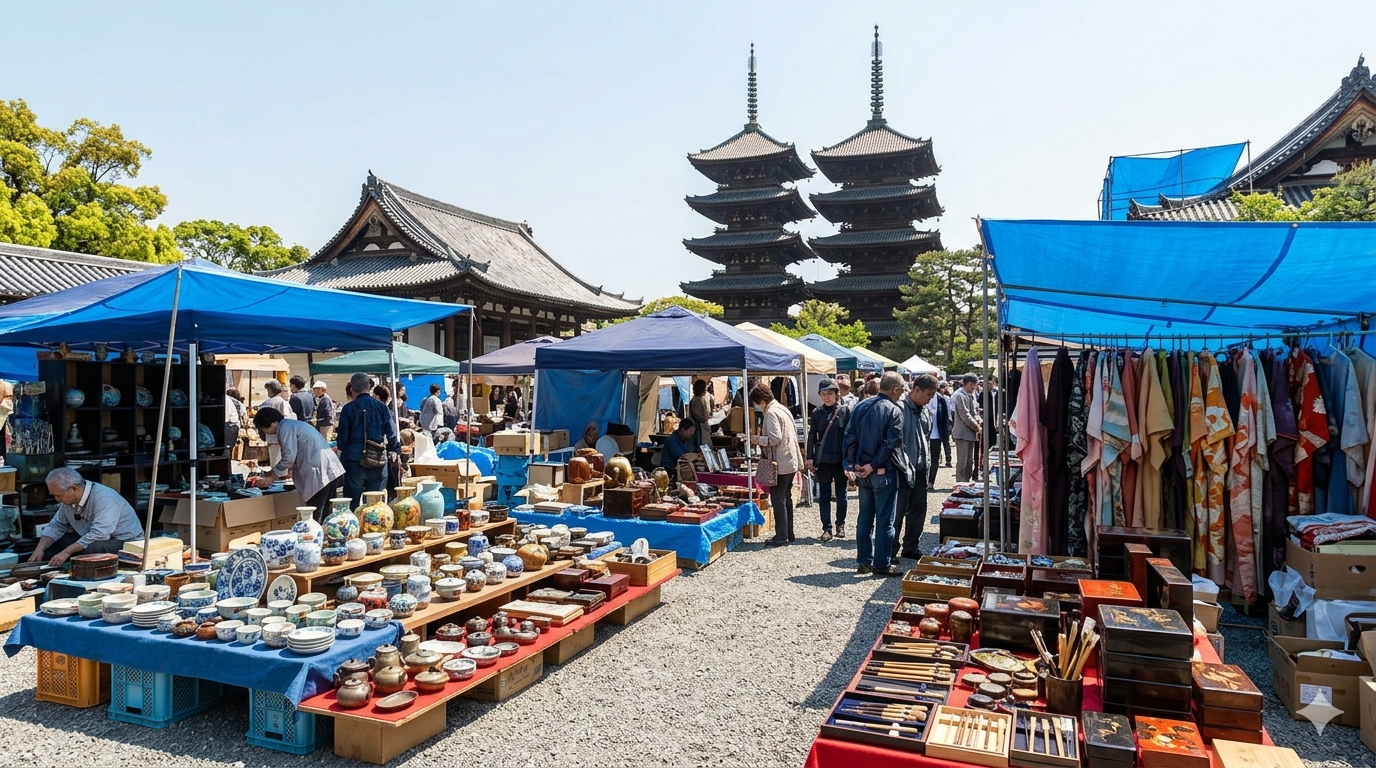
What to find here:
- Vintage kimonos and textiles
- Antique ceramics and pottery
- Old coins and collectibles
- Handmade crafts and local art pieces
This market offers a completely different experience compared to food-focused markets.
Tenjinbashisuji Shopping Street (Osaka): Japan's Longest Market Street
This is Japan's longest shopping street, stretching over 2.5 kilometers, blending traditional market energy with modern retail.
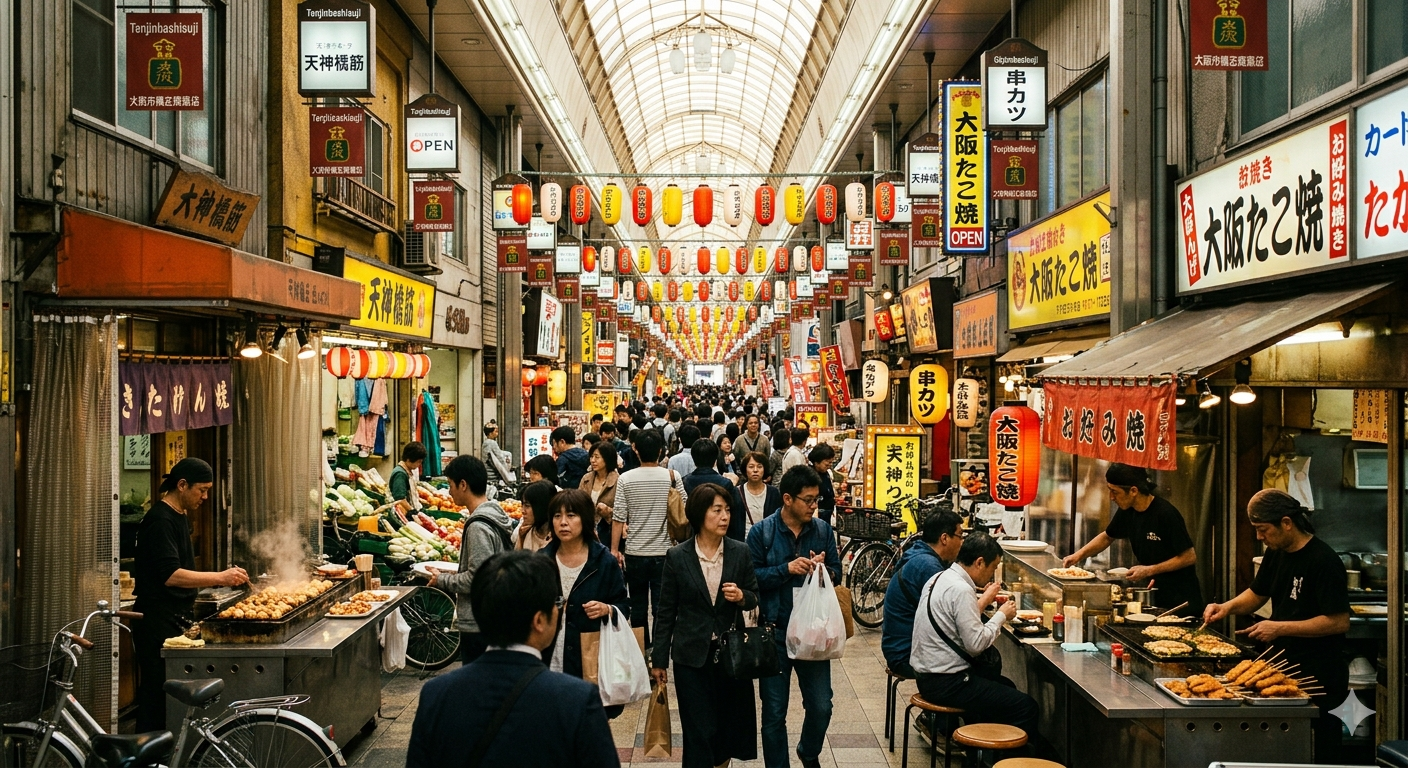
What to find here:
- Local street food
- Affordable clothing and goods
- Traditional sweets and snacks
- Everyday household items
It reflects how locals actually shop in their daily lives.
What Makes Japanese Markets Special?
Japanese markets stand out because of their balance between tradition, cleanliness, and quality. Even in busy street markets, there is an underlying sense of order and respect.
Key characteristics include:
- High-quality fresh ingredients
- Regional specialization (each market has its own identity)
- Strong focus on seasonal goods
- Clean and organized street layouts compared to many global markets
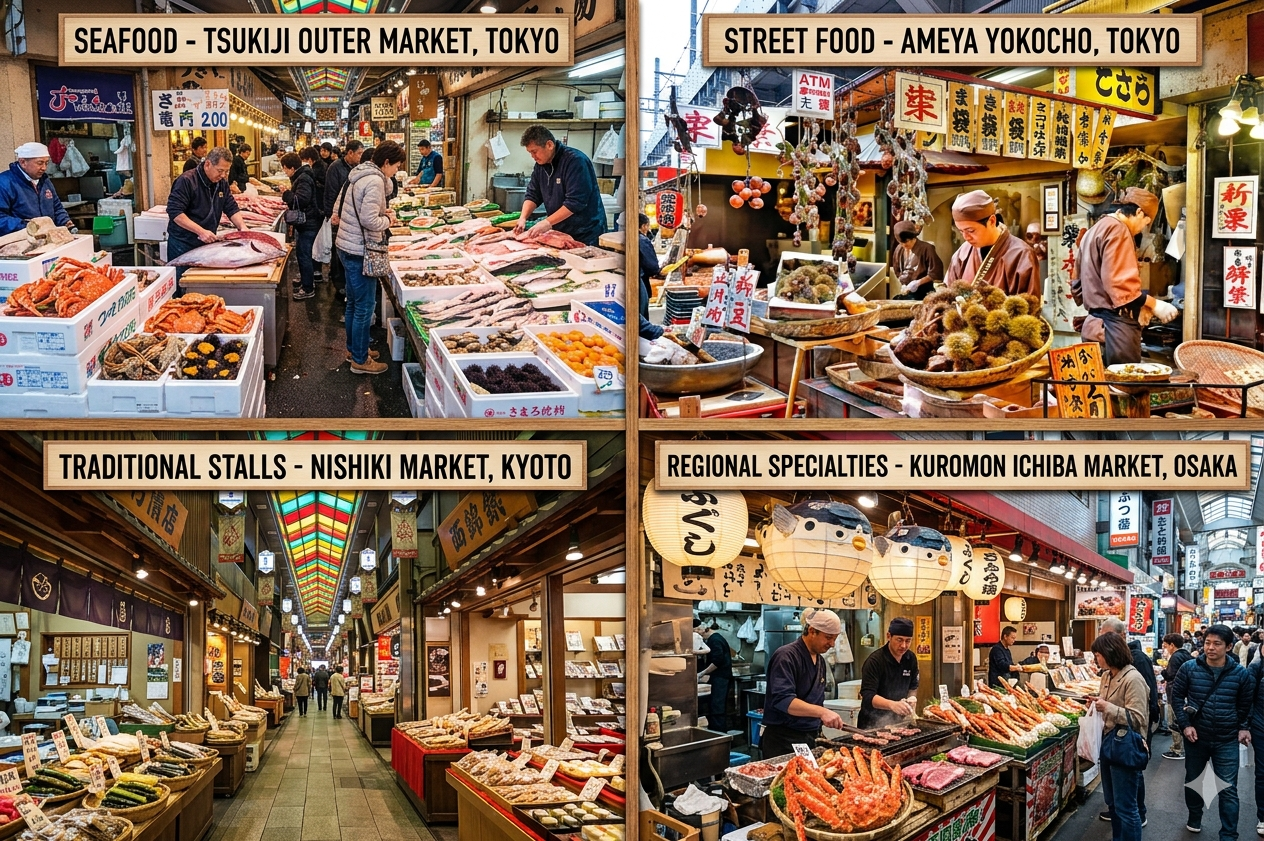
Markets in Japan are not just places to shop, they are cultural spaces where food, tradition, and everyday life come together. Whether it is fresh sushi at Tsukiji, Kyoto pickles at Nishiki, or antiques at a temple flea market, each market offers a different lens into Japanese life.
For travelers, visiting at least one or two local markets is essential to experience Japan beyond its modern shopping districts and department stores.